Telematics as the foundation for digital logistics in Southeast Asia

AuthorDenis Demianikov
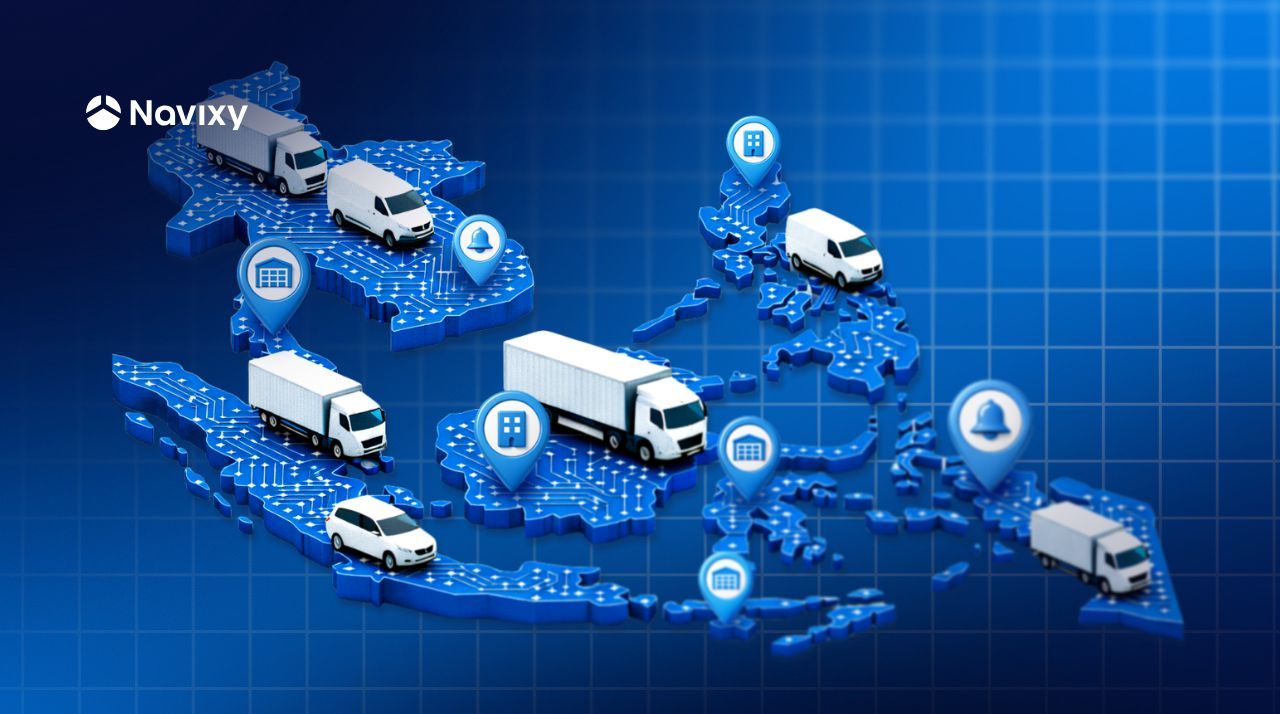
Southeast Asia (SEA) is emerging as a cornerstone for the implementation of smart mobility and telematics solutions. Industry forecasts indicate steady growth, with the regional fleet management market expected to demonstrate a compound annual growth rate (CAGR) of approximately 11–14% through the end of the decade. According to analytical research, including reports from Berg Insight, the installed base of telematics systems in Southeast Asia reached 4.0 million units in 2025 and is projected to continue growing as logistics, transport, and e-commerce infrastructure undergo rapid digitalization.
For Navixy, 2025 marked a pivotal milestone in its regional development. The platform now ranks among the leading telematics solutions in Southeast Asia by active installed base, exceeding 50,000 connected units. This achievement reflects the platform's capacity to navigate the region's complex regulatory and operational landscapes. Indonesia has become a primary growth catalyst for Navixy in the region, with active connected assets expanding by 40% year over year – underscoring the structural integration of telematics into digital transport infrastructure.
Regulations as a structural catalyst
In Indonesia, telematics is increasingly viewed as an integral part of the mobility management framework rather than just an optimization tool. The Online Land Transportation Reporting System (S-PIONER) establishes rigorous requirements for transport flow transparency and operational reporting for businesses. Concurrently, the enforcement of Over Dimension Over Loading (ODOL) parameters under Law No. 22/2009 is becoming progressively stringent, with strategic programs aimed at reducing operational risks and enhancing road safety.
The deployment of Weigh-in-Motion (WIM) systems, integrated with Electronic Traffic Law Enforcement (ETLE) and Automatic Number Plate Recognition (ANPR) cameras, creates a robust foundation for automated enforcement. Utilizing axle load sensors and telematics data also supports digital E-KIR inspections and participation in government tenders that require verified vehicle condition reports.
Additionally, the government is considering decarbonization initiatives, including mandatory CO2 emission reporting, positioning telematics as an essential tool for ESG analytics. The National Logistics Ecosystem (NLE) further integrates this landscape by unifying customs operations, port infrastructure, and transport registries into a single digital environment.
From monitoring to programmable data architecture
Telematics is gradually moving beyond basic object tracking to become a core part of operational data infrastructure. The industry is shifting from the traditional "data → storage → report" model toward agile architectures focused on Data Ingestion, Processing, and Orchestration. Given the requirements of S-PIONER and ODOL enforcement, businesses require real-time operational responses rather than just historical analytics.
Navixy IoT Logic enables automated telemetry event processing, providing real-time alerts for potential regulatory violations such as vehicle overloading or unauthorized route deviations. Analytical tools like Navixy IoT Query facilitate in-depth historical analysis of telematics data, including fuel consumption and engine parameters. This forms the basis for emission reporting derived from actual fleet operations, supporting corporate ESG initiatives.
EVs and smart mobility
The rising adoption of electric vehicles (EVs) in the region is creating new requirements for telematics platforms, including integration with Battery Management Systems (BMS) and monitoring State of Charge (SoC) and State of Health (SoH) parameters. Telematics platforms utilize high-precision GNSS data to enhance routing accuracy and support Multi-Lane Free Flow (MLFF) tolling infrastructure. In areas with limited mobile connectivity, local navigation data correction becomes a critical factor in ensuring operational reliability.
Telematics as an infrastructure imperative
The Southeast Asian market is transitioning toward an operational intelligence model where telematics is a core component of digital transport infrastructure. By offering open APIs, orchestration through IoT Logic, and analytical power via IoT Query, Navixy transforms telematics into a strategic asset. This approach enhances operational transparency and ensures technological readiness for businesses navigating the future of smart mobility in one of the world's most dynamic regions.