How to forward data to Recurso Confiable with Navixy

AuthorAdrian M., Technical Solution Engineer
For many enterprise shippers in Mexico, Recurso Confiable (RC) data sharing is part of the contract. Fleets, however, face shifting specs and fragile custom builds that slow rollouts and risk rejected events. This article shows how Navixy’s Data Forwarding turns RC sharing into a fast, reliable workflow so fleets stay compliant and win enterprise business.
Summary
- In Mexico, many large buyers expect carriers to feed telematics into Recurso Confiable; without that feed, vendors often struggle to qualify for big tenders.
- Navixy provides an outbound stream that posts device data to RC on a steady five-minute cadence and can mirror the same stream to other destinations.
- The feed carries events, identifiers, precise location, trip and customer context, credentials, and required config so records are accepted and auditable.
- Support for the current RC guideline (D-TI-15 v13) includes environmental readings like temperature and humidity from connected sensors, cutting rejections and enabling cold-chain programs.
- Near-term roadmap: simpler HTTP posting from IoT Logic and per-endpoint field selection to speed large rollouts.
What is Recurso Confiable?
Recurso Confiable (RC) is a real-time logistics visibility platform widely used in Mexico and across Latin America. It connects to telematics devices and operational systems, applies analytics and proactive monitoring, and gives shippers and carriers a single view of trip status, exceptions, and operator performance. The goal is straightforward: safer operations, on-time delivery, and consistent compliance.
As e-commerce grows, regulations tighten, and security incidents increase along key corridors, RC serves as an independent monitor. Many enterprise shippers make RC data sharing a contractual condition for carriers, giving buyers external oversight and an auditable trail without adding custom tools on their side.
Why send data to Recurso Confiable?
There is no public law in Mexico that mandates forwarding to RC, yet many enterprise shippers write it into their contracts. For fleets chasing those accounts, lack of RC support can be a deal-breaker, knocking them out of RFPs and preferred-carrier lists. In other words, the “why” comes down to four business drivers:
- Contractual compliance and external oversight Satisfy enterprise requirements and give customers an independent view of trips, drivers, and exceptions.
- Safety and operator verification Feed RC’s background-check and real-time alerting workflows to cut incidents and protect brand reputation.
- Operational clarity Centralize location and telemetry to spot deviations early, optimize routes, and reduce downtime.
- Customer confidence and growth RC-ready fleets qualify for larger tenders and signal a modern, tech-enabled operation.
Navixy as a data-forwarding source
Data Forwarding in Navixy lets you stream GPS and telematics data from your platform to any external server or application. Think of it as a real-time data relay: the moment a device reports position or sensor values, Navixy can push that information almost instantly to a destination you specify via API or web service.
The main purposes of data forwarding
- Compliance with government regulations that require the transmission of specific data such as location and speed.
- Business integration, so that large logistics or retail companies receive GPS and telematics data directly in their systems to fulfill contractual obligations.
- Data consolidation to standardize information from multiple providers in complex systems.
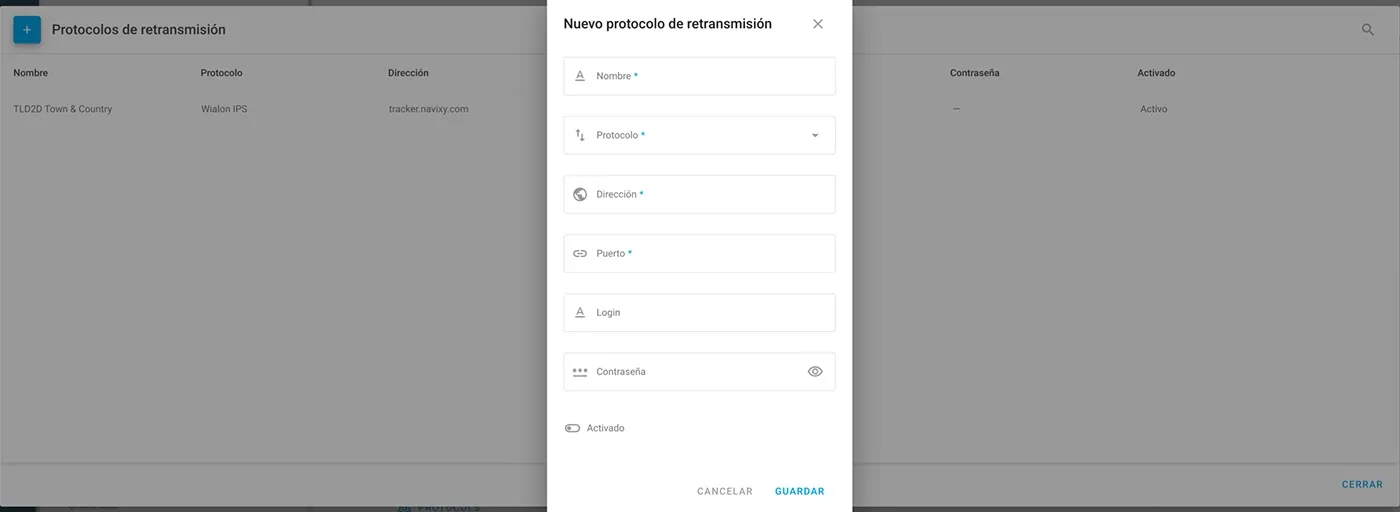
How to work with data forwarding in Navixy
- In Devices & Settings, attach one or more forwarding protocols to a device.
- Pick the outbound protocol and enter the host address and port.
- Set or override the sending ID, then save.
- Edit, suspend, or delete forwarding protocols any time (plan limits apply).
You can create multiple forwarding protocols per device, allowing the same data stream to reach RC, an ERP, and a BI lake simultaneously.
| Item | Value |
|---|---|
| Send interval | Every 5 minutes |
| Transport | SOAP over HTTP |
| Format | XML |
Fields transmitted
- Event data – AVL event code, ignition status, odometer, speed, course
- Vehicle ID – license plate, device ID
- Location – latitude, longitude, altitude, heading
- Shipping info – shipment ID, date, customer ID, customer name
- Credentials – RC username and password
- Config parameters – any values required by RC spec
- External reference – external ID or link
This structured payload keeps RC updated on the exact state of each trip and vehicle.
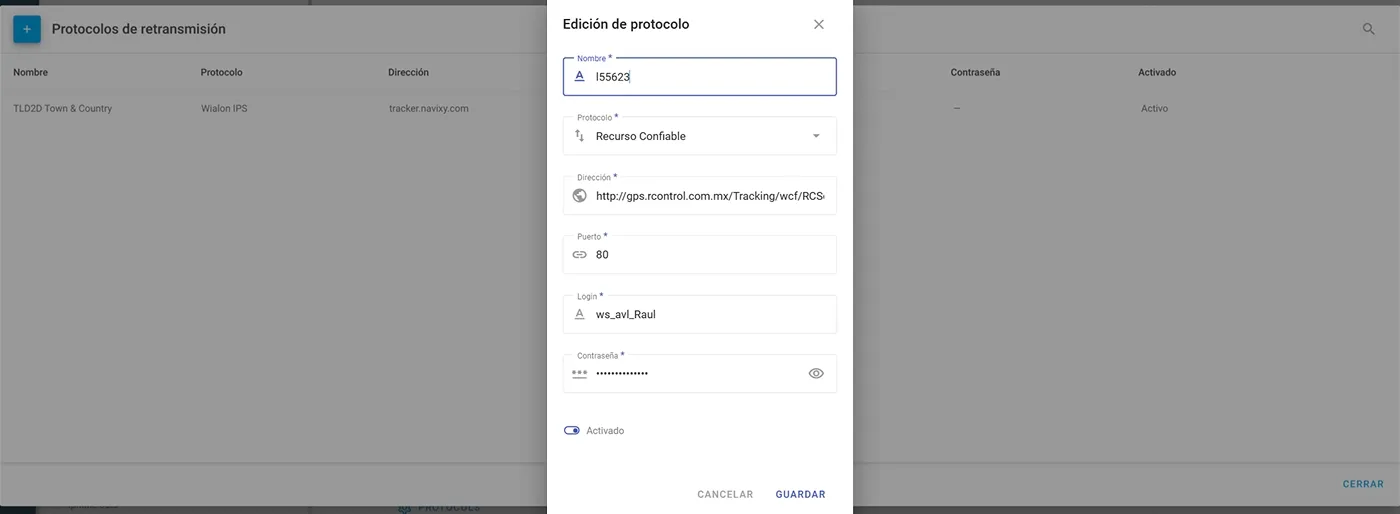
Because Navixy can relay to Recurso Confiable out of the box, integrators and fleet operators scale faster, satisfy enterprise shippers, and close deals that require RC visibility—without writing custom code.
Custom parameters
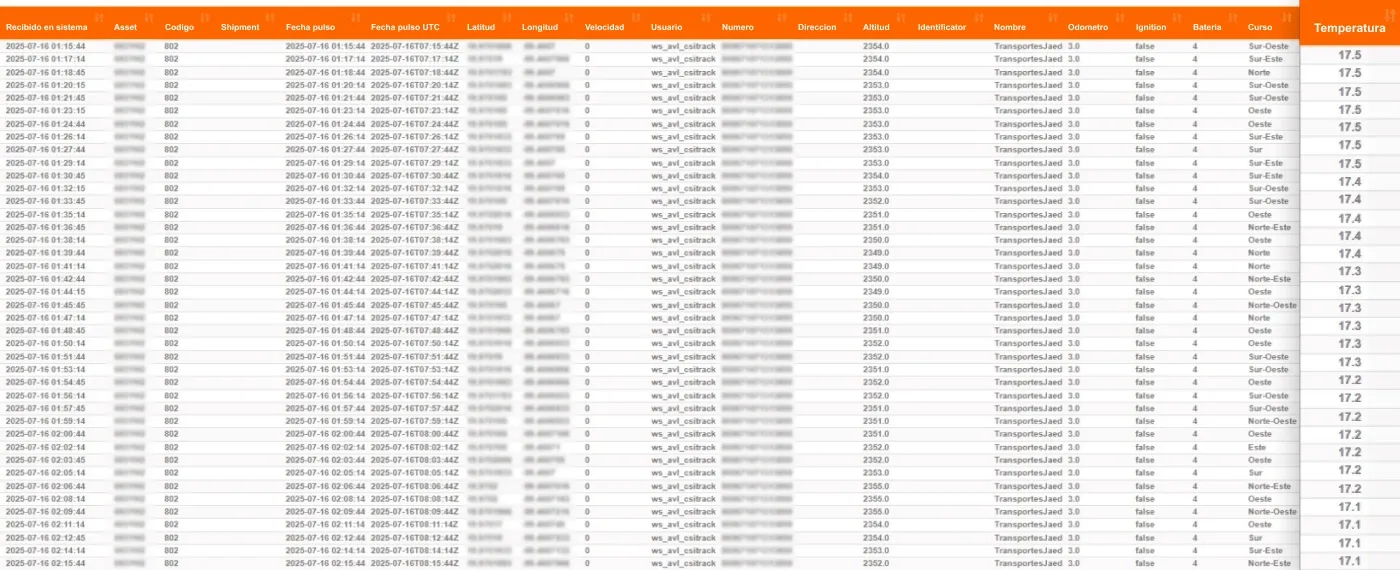
Easy data forwarding is the starting line. Enterprise shippers also want the right data in the right format. That includes environmental metrics such as temperature and humidity to prove product integrity, support cold-chain SLAs, and keep an auditable record when exceptions occur.
To meet these expectations, Navixy now complies with D-TI-15 version 13. The platform includes all newly required fields and, when available, reads temperature and humidity directly from compatible external sensors. Pulling values from sensors improves accuracy and reliability in the data you share with Recurso Confiable.
This update matters for both compliance and customer acceptance. If required fields are missing or misconfigured, RC may reject events or limit compatibility. For full definitions and formatting, please refer to the D-TI-15 v13 specification.
Future plans for data forwarding
We are expanding IoT Logic with features that make large-scale integrations faster and easier.
Soon, output nodes in IoT Logic will be able to send telematics data to Recurso Confiable (RC) over HTTP. This will shorten setup and configuration time and make mass deployments more efficient.
In addition, the platform will let you forward any parameter or attribute to relay destinations of your choice, as long as the destination has a reachable domain or IP and port. This gives teams fine control over what is sent and where it goes.
Together, these improvements help you keep pace with changing data requirements while opening more opportunities and flexibility in fleet management.
Conclusion
Recurso Confiable is widely used by enterprise shippers in Mexico to supervise trips, document compliance, and protect service levels. Navixy makes that data sharing straightforward. With Data Forwarding, fleets can deliver structured, standards-aligned telemetry to RC, including support for D-TI-15 v13 and new fields like temperature and humidity sourced from external sensors.
Looking ahead, enhancements to IoT Logic will enable HTTP output to RC and flexible parameter forwarding to other endpoints, which shortens setup time and simplifies mass rollouts. Together, these capabilities help carriers and integrators meet customer requirements today and stay ready as specifications evolve.
Have questions about forwarding to Recurso Confiable or how Navixy’s Data Forwarding can fit your business? Contact our Sales team and we’ll walk you through the best approach.